
Hypertension is extremely prevalent in patients with diabetes. Limited data exist on whether patterns of drug therapy among diabetic hypertensive patients are consistent with evidence-based practice guidelines. There are many variations in prescribing patterns of diabetic hypertensive patients needs much care while choosing drugs. We have very limited research-based information regarding the patterns of drug therapy among diabetic hypertensive patients. The aim of this study was to assess the patterns of drug therapy among diabetic hypertensive patients. This retrospective study was conducted in the Department of Pharmacology, Uttara Adhunik Medical College and Hospital, Dhaka, Bangladesh during the period from January 2000 to December 2020. In total 78 diabetic hypertensive patients treated in the mentioned hospital were enrolled in this study as study subjects. As per the inclusion criteria of this study, only those patients who got at least one anti-diabetic and one anti-hypertensive drug in treatment were included. Proper written consents were taken from all the participants before data collection. All data were processed, analyzed and disseminated by using MS Excel and SPSS version 23.0 program as per necessity. In this study, the male-female ratio of the participants was 1.3:1. The mean ±SD age (Year) and BMI (Body Mass Index) (Kg/m2) of our participants were 53.2 ±6.82 and 32.41 ±2.49 respectively. For our patients, 87% and 13% drugs were used through oral and parenteral routes respectively. In this study, among all of our participants, as antihypertensive drug therapy, in 49%, 36% and 15% cases mono, duel and triple antihypertensive drugs were used respectively. In this study, among all of our participants, as anti-diabetic drug therapy, in majority of the patients, mono-therapy was used whereas, in 24% cases double and in 10% cases triple drug therapy was used. Majority of the diabetic hypertensive patients are treated by mono antihypertensive and mono antidiabetic therapy. The treatment cost of insulin receiving patients are higher than that of other diabetic hypertensive patients.
| Published in | Clinical Medicine Research (Volume 14, Issue 6) |
| DOI | 10.11648/j.cmr.20251406.12 |
| Page(s) | 217-222 |
| Creative Commons |
This is an Open Access article, distributed under the terms of the Creative Commons Attribution 4.0 International License (http://creativecommons.org/licenses/by/4.0/), which permits unrestricted use, distribution and reproduction in any medium or format, provided the original work is properly cited. |
| Copyright |
Copyright © The Author(s), 2025. Published by Science Publishing Group |
Patterns, Diabetic, Hypertension, Drug Therapy, Prescription
Characteristics | n (%)/Mean ±SD | |
|---|---|---|
Gender | ||
Male | 44 | 56% |
Female | 34 | 44% |
Age | ||
Age in year | 53.2 ±6.82 | |
BMI | ||
BMI (Kg/m2) | 32.41 ±2.49 | |
Mono antihypertensive drug | n | % |
|---|---|---|
Diuretics | 3 | 4% |
b-Blockers | 2 | 3% |
Calcium Channel Blockers | 13 | 17% |
ACE Inhibitors | 12 | 15% |
ARBs | 8 | 10% |
2 Drugs combination | n | % |
|---|---|---|
ARB +Diuretics | 5 | 6% |
CCB+ARB | 6 | 8% |
b-Blockers +ARB | 1 | 1% |
CCB +Diuretics | 1 | 1% |
b-Blockers +diuretics | 1 | 1% |
CCBs + b-Blockers | 3 | 4% |
ACEI+ Diuretics | 5 | 6% |
ACEI + CCBs | 3 | 4% |
ACEI + CCBs | 1 | 1% |
3 Drugs combination | n | % |
|---|---|---|
ACEI + b-Blockers + CCBs | 3 | 4% |
ACEI + b-Blockers + Diuretics | 1 | 1% |
ACEI + CCBs+ Diuretics | 3 | 4% |
b-Blockers +ARB +diuretics | 2 | 3% |
CCB +ARB +Diuretics | 2 | 3% |
CCB+ b-Blockers +Diuretics | 1 | 1% |
Mono anti diabetic drugs | n | % |
|---|---|---|
Met | 44 | 56% |
SU | 5 | 6% |
DPP-4i | 1 | 1% |
Other | 1 | 1% |
Dual anti diabetic drugs | n | % |
|---|---|---|
Met +SU | 11 | 14% |
Met+DPP-4i | 6 | 8% |
Met +other | 1 | 1% |
Other dual therapy | 1 | 1% |
Triple anti-diabetics | n | % |
|---|---|---|
Met+SU+DPP-4i | 4 | 5% |
Met +SU+TZD | 2 | 2% |
Other triple therapy | 2 | 3% |
ARB | Angiotensin II Receptor Blocker |
ACEI | Angiotensin-converting Enzyme Inhibitor |
CVD | Cardiovascular Disease |
CCB | Calcium Channel Blocker |
HTN | Hypertension |
| [1] | El-Hazmi MA, Warsy AS. Association of hypertension and non-insulin-dependent diabetes mellitusin the Saudi popula- tion. Ann Saudi Med. 2001; 21(1-2): 5-8. |
| [2] | Sharminder Kaur S, Gupta S, Kumar D, Lal M, Gilani Z. Prescribing pattern of antihypertensive drugs in a tertiary care hospital in Jammu- A Descriptive study. JK-Practitioner 2012; 17(4): 38-41. |
| [3] | Diabetes in America, 2nd ed. Bethesda, Md: National Institutes of Health, National Institutes of Diabetes and Digestive and Kidney Diseas- es; 1995. NIH Publication No. 95-1468. |
| [4] | Stamler J, Vaccaro O, Neaton JD, Wentworth D. Diabetes, other risk factors, and 12-yr cardiovascular mortality for men screened in the mul- tiple risk factor intervention trial. Diabetes Care. 1993; 434–44. |
| [5] | Oparil S, Acelajado MC, Bakris GL, Berlowitz DR, Cífková R, Dominiczak AF, Grassi G, Jordan J, Poulter NR, Rodgers A, Whelton PK. Hypertension. Nat Rev Dis Primers. 2018 Mar 22; 4: 18014. |
| [6] | Chobanian AV et al. The Seventh Report of the Joint National Committee on Prevention, Detection, Evaluation, and Treat- ment of High Blood Pressure: the JNC 7 report. JAMA. 2003; 289(19): 2560-72. |
| [7] | Shah J, Khakhkhar T, Bhirud S, Shah RB, Date S. Study of uti- lization pattern of anti-hypertensive drugs in hypertensive diabetic patients with or without reduced renal function at tertiary care teaching hospital. Int J Med Sci Public Health. 2013; 2(2): 175-180. |
| [8] | Berlowitz DR1, Ash AS, Hickey EC, Glickman M, Friedman R, Kader B. Hypertension management in patients with dia- betes: the need for more aggressive therapy. Diabetes Care. 2003; 26(2): 355-9. |
| [9] | Smith DK, Lennon RP, Carlsgaard PB. Managing Hypertension Using Combination Therapy. Am Fam Physician. 2020 Mar 15; 101(6): 341-349. |
| [10] | World Medical Association. (2001). World Medical Association Declaration of Helsinki. Ethical principles for medical research involving human subjects. Bulletin of the World Health Organization, 79(4), 373 - 374. World Health Organization. |
| [11] | Voigt, Paul, and Axel von dem Bussche. "Enforcement and fines under the GDPR." The EU General Data Protection Regulation (GDPR). Springer, Cham, 2017. 201-217. |
| [12] | Alavudeen, Sirajudeen Shaik, et al. "El patrón de prescripción de los fármacos antihipertensivos en los pacientes diabéticos de la Provincia del Sur, Reino de Arabia Saudita." Ars Pharmaceutica (Internet) 56.2 (2015): 109-114. |
| [13] | Hussain, Z., et al. "Patterns of drug therapy among diabetic hypertensive patients with other complications." Int J Pharm Pharm Sci 6.6 (2014): 270-7. |
| [14] | Johnson, Michael L., and Hardeep Singh. "Patterns of antihypertensive therapy among patients with diabetes." Journal of general internal medicine 20.9 (2005): 842-846. |
| [15] | Richards M. The Safety of Calcium Antagonists: An Update. Prescriber Update. 2000; 19: 4–13. |
| [16] | Inzucchi SE, Bergenstal RM, Buse JB, Diamant M, Ferrannini E, Nauck M, et al. Management of hyperglycaemia in type 2 dia- betes, 2015: a patient-centered approach. Update to a position statement of the American Diabetes Association and the European Association for the Study of Diabetes. Diabetes Care 2015 Jan; 38(1): 140-9. |
| [17] | Garber AJ, Abrahamson MJ, Barzilay JI, Blonde L, Bloomgarden ZT, Bush MA, et al. AACE/ACE comprehensive diabetes management algorithm 2015. Endocr Pract. 2015; 21: 438–47. |
| [18] | Garber AJ, Abrahamson MJ, Barzilay JI, et al. Consensus statement by the American Association of Clinical Endocrinologists and American College of Endocrinology on the Comprehensive Type 2 Diabetes management algorithm-2016 EXecutive summary. Endocr Pract. 2018 Jan; 24(1): 91–120. |
| [19] | Davies MJ, D’Alessio DA, Fradkin J, et al. Management of hyperglycaemia in type 2 diabetes, 2018. A consensus report by the American Diabetes Association (ADA) and the European Association for the Study of Diabetes (EASD). Diabetologia. 2018 Dec; 61(12): 2461–98. |
APA Style
Laizu, J., Ghosh, K., Sayeed, A. R. M. (2025). Patterns of Drug Therapy Among Diabetic Hypertensive Patients - A Single Center Study in Bangladesh. Clinical Medicine Research, 14(6), 217-222. https://doi.org/10.11648/j.cmr.20251406.12
ACS Style
Laizu, J.; Ghosh, K.; Sayeed, A. R. M. Patterns of Drug Therapy Among Diabetic Hypertensive Patients - A Single Center Study in Bangladesh. Clin. Med. Res. 2025, 14(6), 217-222. doi: 10.11648/j.cmr.20251406.12
AMA Style
Laizu J, Ghosh K, Sayeed ARM. Patterns of Drug Therapy Among Diabetic Hypertensive Patients - A Single Center Study in Bangladesh. Clin Med Res. 2025;14(6):217-222. doi: 10.11648/j.cmr.20251406.12
@article{10.11648/j.cmr.20251406.12,
  author = {Jahanara Laizu and Kinkar Ghosh and Al Reza Md Sayeed},
  title = {Patterns of Drug Therapy Among Diabetic Hypertensive Patients - A Single Center Study in Bangladesh},
  journal = {Clinical Medicine Research},
  volume = {14},
  number = {6},
  pages = {217-222},
  doi = {10.11648/j.cmr.20251406.12},
  url = {https://doi.org/10.11648/j.cmr.20251406.12},
  eprint = {https://article.sciencepublishinggroup.com/pdf/10.11648.j.cmr.20251406.12},
  abstract = {Hypertension is extremely prevalent in patients with diabetes. Limited data exist on whether patterns of drug therapy among diabetic hypertensive patients are consistent with evidence-based practice guidelines. There are many variations in prescribing patterns of diabetic hypertensive patients needs much care while choosing drugs. We have very limited research-based information regarding the patterns of drug therapy among diabetic hypertensive patients. The aim of this study was to assess the patterns of drug therapy among diabetic hypertensive patients. This retrospective study was conducted in the Department of Pharmacology, Uttara Adhunik Medical College and Hospital, Dhaka, Bangladesh during the period from January 2000 to December 2020. In total 78 diabetic hypertensive patients treated in the mentioned hospital were enrolled in this study as study subjects. As per the inclusion criteria of this study, only those patients who got at least one anti-diabetic and one anti-hypertensive drug in treatment were included. Proper written consents were taken from all the participants before data collection. All data were processed, analyzed and disseminated by using MS Excel and SPSS version 23.0 program as per necessity. In this study, the male-female ratio of the participants was 1.3:1. The mean ±SD age (Year) and BMI (Body Mass Index) (Kg/m2) of our participants were 53.2 ±6.82 and 32.41 ±2.49 respectively. For our patients, 87% and 13% drugs were used through oral and parenteral routes respectively. In this study, among all of our participants, as antihypertensive drug therapy, in 49%, 36% and 15% cases mono, duel and triple antihypertensive drugs were used respectively. In this study, among all of our participants, as anti-diabetic drug therapy, in majority of the patients, mono-therapy was used whereas, in 24% cases double and in 10% cases triple drug therapy was used. Majority of the diabetic hypertensive patients are treated by mono antihypertensive and mono antidiabetic therapy. The treatment cost of insulin receiving patients are higher than that of other diabetic hypertensive patients.},
 year = {2025}
}
TY  - JOUR
T1  - Patterns of Drug Therapy Among Diabetic Hypertensive Patients - A Single Center Study in Bangladesh
AU  - Jahanara Laizu
AU  - Kinkar Ghosh
AU  - Al Reza Md Sayeed
Y1  - 2025/12/11
PY  - 2025
N1  - https://doi.org/10.11648/j.cmr.20251406.12
DO  - 10.11648/j.cmr.20251406.12
T2  - Clinical Medicine Research
JF  - Clinical Medicine Research
JO  - Clinical Medicine Research
SP  - 217
EP  - 222
PB  - Science Publishing Group
SN  - 2326-9057
UR  - https://doi.org/10.11648/j.cmr.20251406.12
AB  - Hypertension is extremely prevalent in patients with diabetes. Limited data exist on whether patterns of drug therapy among diabetic hypertensive patients are consistent with evidence-based practice guidelines. There are many variations in prescribing patterns of diabetic hypertensive patients needs much care while choosing drugs. We have very limited research-based information regarding the patterns of drug therapy among diabetic hypertensive patients. The aim of this study was to assess the patterns of drug therapy among diabetic hypertensive patients. This retrospective study was conducted in the Department of Pharmacology, Uttara Adhunik Medical College and Hospital, Dhaka, Bangladesh during the period from January 2000 to December 2020. In total 78 diabetic hypertensive patients treated in the mentioned hospital were enrolled in this study as study subjects. As per the inclusion criteria of this study, only those patients who got at least one anti-diabetic and one anti-hypertensive drug in treatment were included. Proper written consents were taken from all the participants before data collection. All data were processed, analyzed and disseminated by using MS Excel and SPSS version 23.0 program as per necessity. In this study, the male-female ratio of the participants was 1.3:1. The mean ±SD age (Year) and BMI (Body Mass Index) (Kg/m2) of our participants were 53.2 ±6.82 and 32.41 ±2.49 respectively. For our patients, 87% and 13% drugs were used through oral and parenteral routes respectively. In this study, among all of our participants, as antihypertensive drug therapy, in 49%, 36% and 15% cases mono, duel and triple antihypertensive drugs were used respectively. In this study, among all of our participants, as anti-diabetic drug therapy, in majority of the patients, mono-therapy was used whereas, in 24% cases double and in 10% cases triple drug therapy was used. Majority of the diabetic hypertensive patients are treated by mono antihypertensive and mono antidiabetic therapy. The treatment cost of insulin receiving patients are higher than that of other diabetic hypertensive patients.
VL  - 14
IS  - 6
ER  -
Department of Pharmacology, Uttara Adhunik Medical College and Hospital, Dhaka, Bangladesh
Department of Epidemiology and Research, Bangladesh Sishu Hospital & Institute, Dhaka, Bangladesh
Department of Public Health, University of Southern Denmark, Odense, Denmark
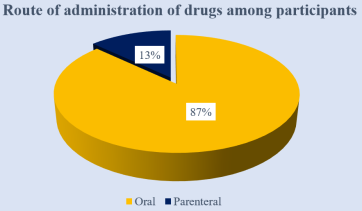
Figure 1. Pie chart showed route of administration of drugs among participants (N=78).
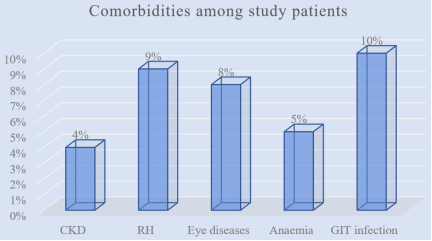
Figure 2. Bar chart showed distribution of comorbidities among study patients (N=78).
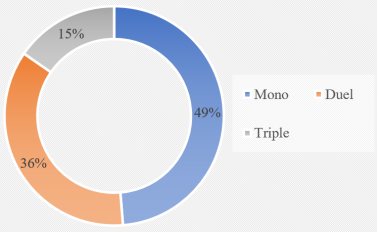
Figure 3. Ring chart showed types of antihypertensive drug therapies used among participants (N=78).
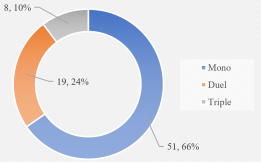
Figure 4. Ring chart showed Types of anti-diabetic drug therapies used among participants (n=7).




 Share This Article
 Twitter
 Linked In
 Facebook
 Copy
Copy Download